
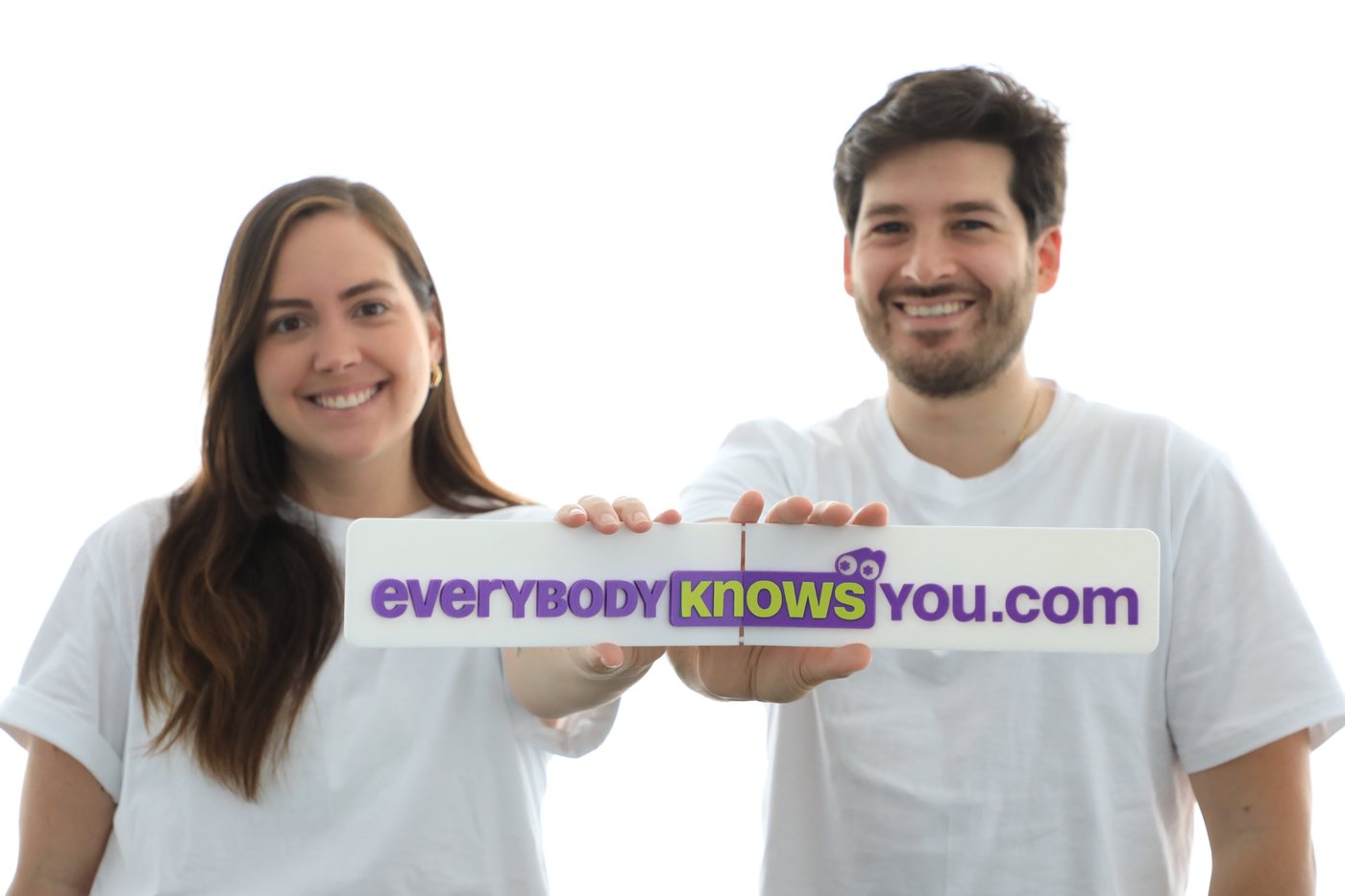
Consumer search behavior is changing rapidly as artificial intelligence advances, and brands that fail to adapt their digital presence risk being left out of the answers these systems provide. That is the diagnosis behind the launch of everybodyknowsyou, a new Salvadoran company specialized in this kind of strategy.
The phenomenon is backed by recent data. According to a study by the firm SparkToro published in June 2026, based on Similarweb data, the share of Google searches that end without the user clicking on any result rose from 60.5% in 2024 to 68% in the first four months of 2026. In other words, more than two thirds of searches are now resolved directly on the results page, without the user visiting any website.
That change has direct implications for brands and professionals, according to Nelson Inno and Marcela Lemus, cofounders of everybodyknowsyou. Both agreed that companies must start thinking about their digital presence not only for the human consumer, but also for the artificial intelligence agents that increasingly mediate decisions about buying, hiring, and consumption.
"It is important for people to be aware that if their brand is present online, whether through active social media accounts or because a news story appears, they can manage to control their narrative," said Lemus.
Inno explained that this process has happened before, when traditional search engines lost ground to social media as a way to find businesses or services. In his analysis, that same shift is now happening toward artificial intelligence, with one relevant difference: whereas before a user would still review several results or posts before deciding, today they tend to accept the first answer an AI assistant gives them as valid.
"Now people don't even click into the links Google gives you," he said, adding that the same applies to the reputation of brands, companies, and individuals, since an AI system builds its answer from everything it finds available online about someone, including news, social media, or third-party mentions.
The founders noted that this transformation is not limited to selling digital products; it also reaches the country's traditional sectors. Inno cited tourism as an example, one of El Salvador's fastest-growing sectors in recent years, and warned that much of the hotel and tourism-experience offering still lacks a structured presence that an AI system can easily interpret. He explained that in the United States, 2% of e-commerce is already carried out through purchases guided or executed by artificial intelligence, a trend that, he said, is only just beginning in the region.
Inno also cited a projection from the consulting firm Gartner, according to which 90% of business-to-business (B2B) purchases will be intermediated by AI agents by 2028, moving more than $15 trillion in that segment globally.
"It is basically someone asking Claude, Gemini, or ChatGPT [...] I need a supplier for such and such, which one do you recommend," he illustrated, to show how this kind of query is already replacing the traditional search for suppliers in many cases.
For the founders, the challenge is not only about visibility, but about competition. Inno argued that many Salvadoran companies measure their competition against similar businesses within the local market, when in reality the battle for attention and customers is already happening on a global scale, against providers from any country able to offer a similar service at a lower cost. In that sense, he considered that the window of opportunity to position yourself early is limited, at a time when companies like Visa and Mastercard are already developing financial products designed specifically for AI agents to make purchases autonomously.
everybodyknowsyou's approach
In this context everybodyknowsyou emerged, founded by Inno, who has prior experience in digital project development and training in artificial intelligence, and Lemus, who comes from the advertising and digital marketing sector. The company builds websites and information structures designed so that AI systems can accurately interpret who a brand is, what it offers, and why it is trustworthy, instead of relying on generic templates.
You can contact them at https://everybodyknowsyou.com.
Among the most common mistakes they identify in Salvadoran micro, small, and medium-sized enterprises (MSMEs) are the absence of their own website, exclusive reliance on social media, and poorly structured pages where key information (such as buy buttons) is pushed into the background. Inno added that another frequent mistake is that businesses try to cover too many value propositions at once, which confuses both users and the AI systems themselves.
Both founders recommended that any brand or professional seeking to position themselves start by defining a clear value proposition and communicating it through free channels, such as a Google Business listing and social media, before investing in more professional development. "The first two steps are free and everyone should do them," Inno stated.
The founders also suggested that El Salvador has a particular opportunity to position itself as a regional reference in this field, thanks to its size and its international recognition in areas such as bitcoin, tourism, and security. Inno said he hopes more Salvadoran companies dedicated to this kind of digital infrastructure will emerge in the coming months, given a demand that, he indicated, has already awakened among foreign investors operating in the country.
By Kevin Rivera, Diario El Salvador. Original (Spanish): diarioelsalvador.com.